Every watch runs on one of two basic engines: quartz or automatic. The difference shapes everything from accuracy to how much attention the watch needs from you.
How a quartz movement works
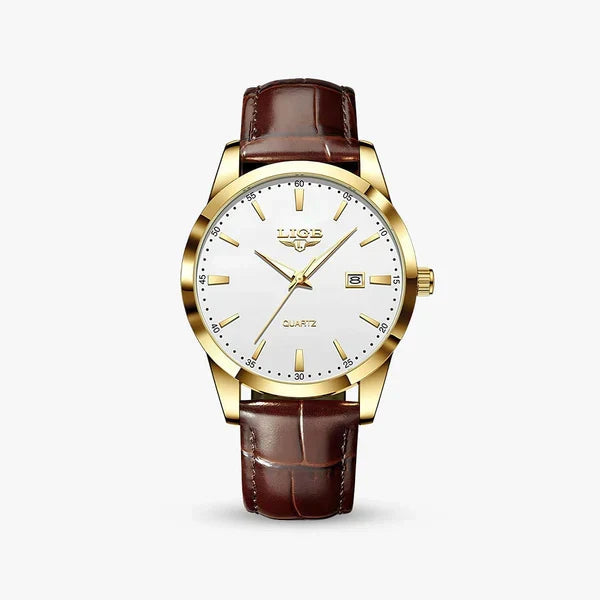
A quartz movement uses a battery to send an electric current through a tiny quartz crystal, which vibrates at a precise, constant frequency. That vibration drives the hands. The result is remarkable accuracy — typically within a few seconds a month — at a lower cost, with very little upkeep. The only maintenance is a battery change every 2 to 3 years.
How an automatic movement works
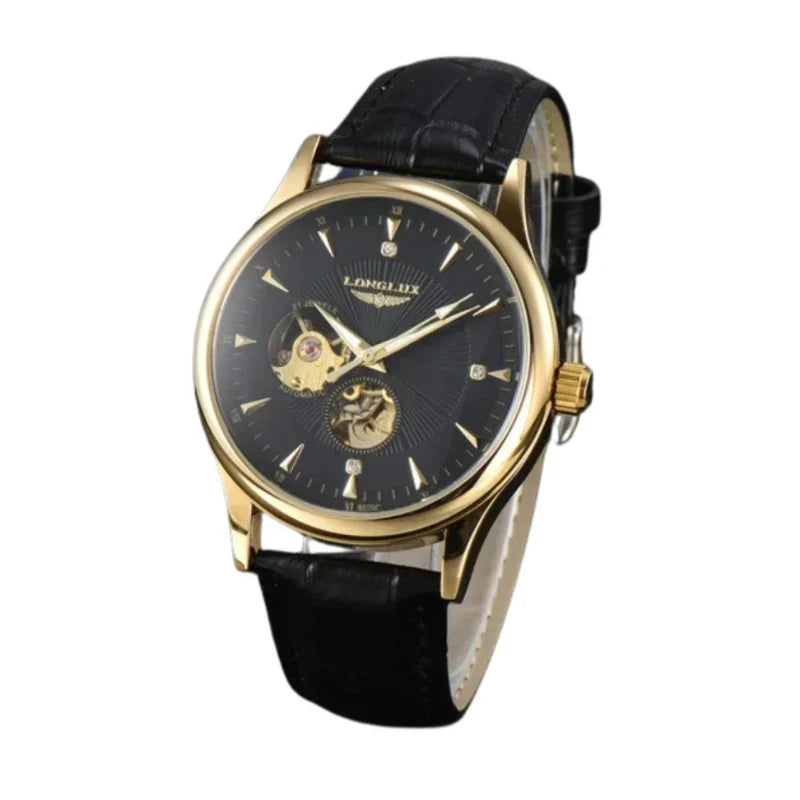
An automatic movement has no battery. Instead, a weighted rotor spins with the natural motion of your wrist, winding the mainspring that powers the watch. Worn regularly, it never needs winding by hand. Left sitting for a few days, it stops and needs to be reset. Automatics also run slightly less precisely than quartz — a variance of a few seconds a day is normal and expected, not a defect.
Accuracy
Quartz wins decisively on raw precision. If timekeeping accuracy is the priority, quartz is the more rational choice.
Maintenance
Quartz asks less of you: a battery swap every few years, done by any jeweler. Automatics ask for regular wear, and mechanical servicing every several years to keep the movement running smoothly.
What it feels like to own
This is where the real difference lives. A quartz watch is quietly reliable — you put it on and it works. An automatic watch is powered by you; there's a mechanical, almost living quality to knowing your own movement keeps it running. Neither is more "correct" — it's a question of what kind of relationship you want with the object on your wrist.
Which should you buy?
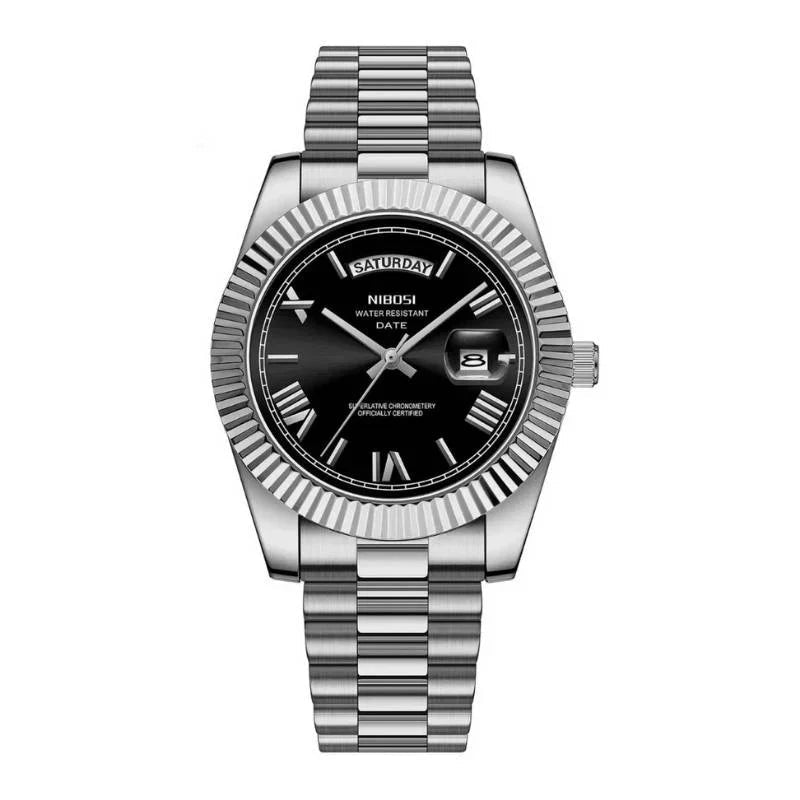
If you want dependable accuracy with minimal thought, choose quartz — like most of the pieces in our steel bracelet collection. If you want the mechanical tradition and don't mind a watch that needs to be worn to stay accurate, look at an automatic piece such as the Bellagio or Riviera. Full movement specifications are listed on every product page — see our FAQ for more on care and battery life.