
Marcus W.
A beautiful classic design
Really impressed with this watch. The Roman numeral dial gives it a classic look, while the chronograph details make it feel more modern.
Was this helpful?
Buy one, get the second watch 50% off
Free shipping · 30-day money-back

Scratch the card to reveal it.
One order. Doesn't combine with the second-watch offer.

The Galileo
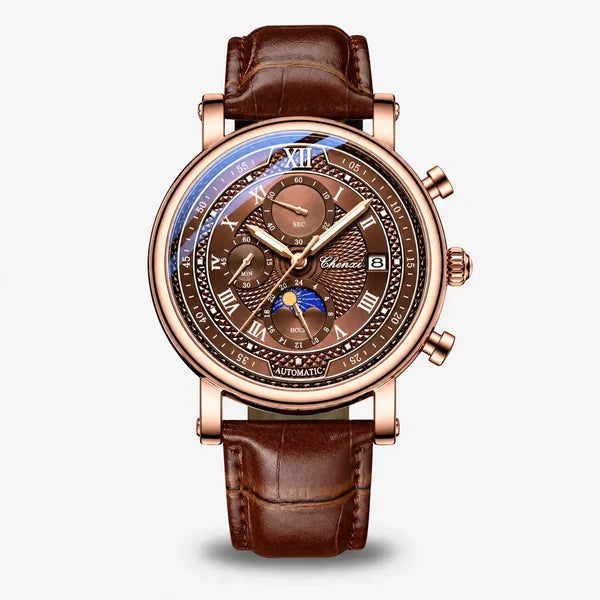
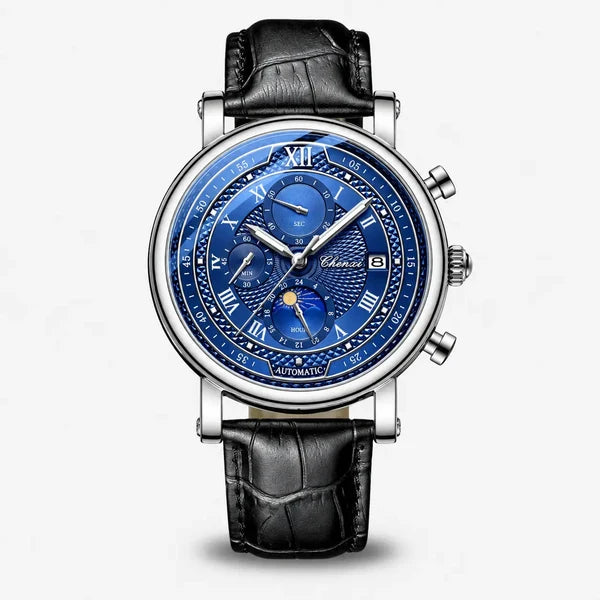
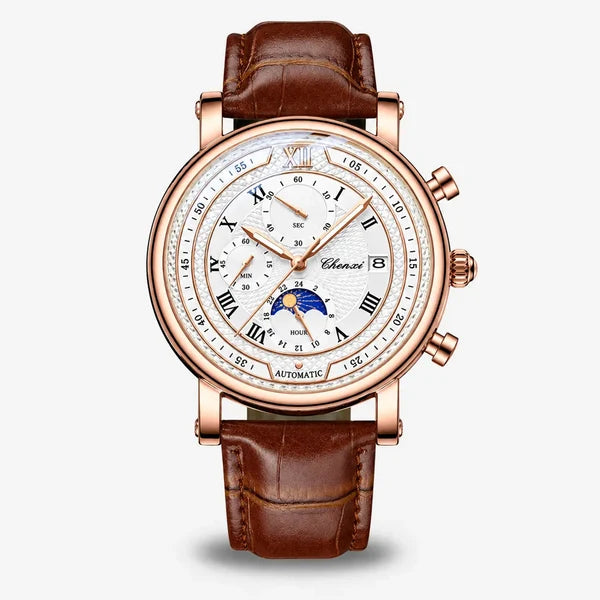
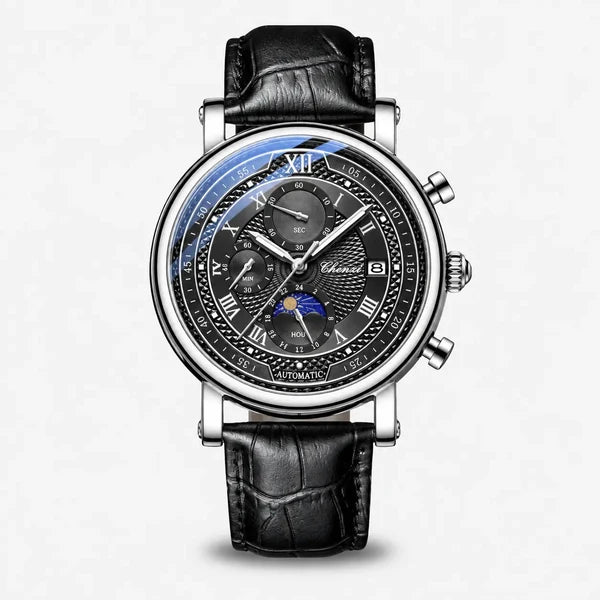
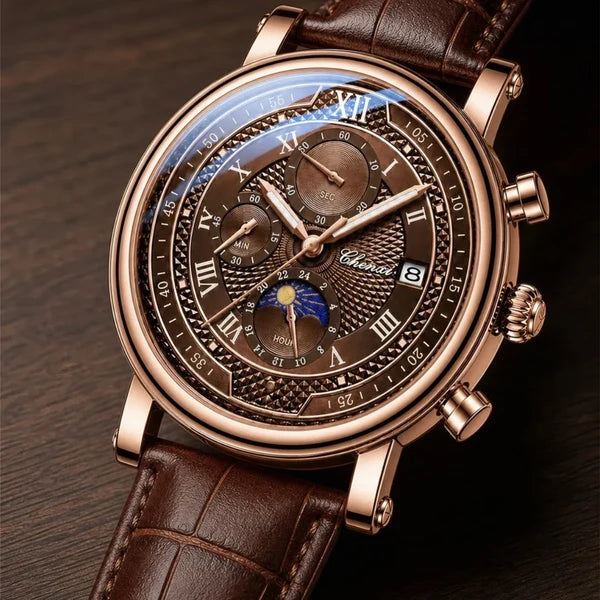
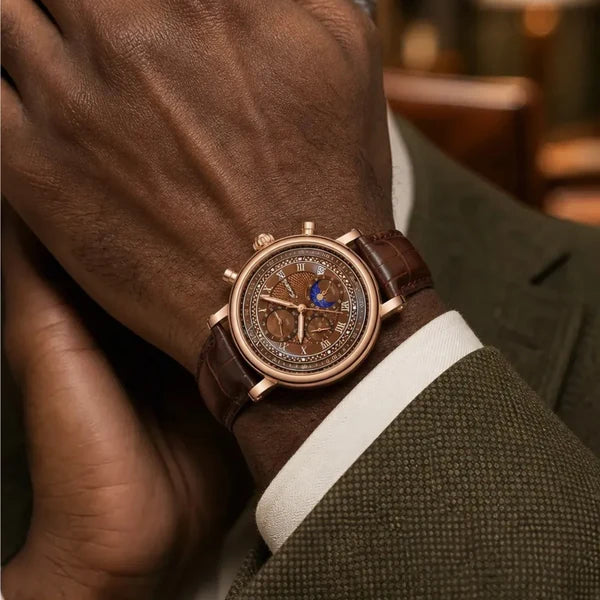
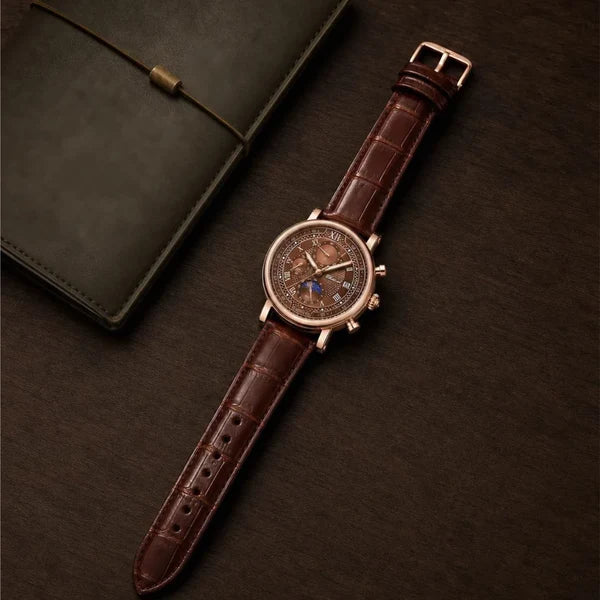
From across the table, it reads as a dress watch. Up close, it shows seconds, minutes, a 24-hour scale, a moon phase and the date, under polished Roman numerals and a layered guilloché dial.
Specifications
Every Vanetto watch is covered for one year from delivery against manufacturing defects in the movement, crown, strap and clasp.
If something isn't right, tell us what happened. You choose a replacement or a full refund, and the shipping is on us. You never pay to resolve a defect.
Free shipping on every order, with tracking from the day it ships.
Arrives in 8–12 days from your order.
30 days to change your mind. If the watch isn't right, ask for a full refund within 30 days of delivery. No reason needed, and nothing to ship back.
The dress chronograph
The chronograph began as a tool for timing. The dress chronograph gave it a place at the table.
Early chronographs timed horse races and counted pulses at the bedside. On the wrist, the complication found a second life under a shirt cuff, cased in polished metal. The Galileo belongs to that second line. Two round pushers sit at two and four, flanking a fluted crown. They run the chronograph when there is something to time, and otherwise stay quiet.
Guilloché in two patterns
Guilloché began at the engraver's bench, as fine repeating lines cut into metal on a hand-turned lathe.
Watchmakers adopted it to give a dial depth without adding color. The Galileo carries two of its classic patterns. Waves fan across the center. Around them runs a hobnail ring, the small pyramids engravers call Clous de Paris. The 13.5mm case leaves room for the dial to be built in tiers. Texture gives all four dials, ivory to onyx, a surface that rewards a second look.
Written in Roman numerals
Roman numerals are the traditional script of the formal dial.
Here they are polished, with XII set larger at the top. The hour and minute hands are slim and luminous, finished to match the case. The outer flange counts the minutes in fives, from 05 to 60. Each element keeps to its own ring, from the minute track at the edge to the subdials at the center. A dial with this much on it still reads in order.
The dress chronograph
The chronograph began as a tool for timing. The dress chronograph gave it a place at the table.
Early chronographs timed horse races and counted pulses at the bedside. On the wrist, the complication found a second life under a shirt cuff, cased in polished metal. The Galileo belongs to that second line. Two round pushers sit at two and four, flanking a fluted crown. They run the chronograph when there is something to time, and otherwise stay quiet.
Guilloché in two patterns
Guilloché began at the engraver's bench, as fine repeating lines cut into metal on a hand-turned lathe.
Watchmakers adopted it to give a dial depth without adding color. The Galileo carries two of its classic patterns. Waves fan across the center. Around them runs a hobnail ring, the small pyramids engravers call Clous de Paris. The 13.5mm case leaves room for the dial to be built in tiers. Texture gives all four dials, ivory to onyx, a surface that rewards a second look.
Written in Roman numerals
Roman numerals are the traditional script of the formal dial.
Here they are polished, with XII set larger at the top. The hour and minute hands are slim and luminous, finished to match the case. The outer flange counts the minutes in fives, from 05 to 60. Each element keeps to its own ring, from the minute track at the edge to the subdials at the center. A dial with this much on it still reads in order.
Warm metal, grained leather
Rose gold-tone or silver, each on the leather that suits it.
The round alloy case is polished all around, down to the long, straight lugs. Crocodile grain has long been the classic finish for a dress strap. Here it is embossed into leather, espresso brown on the rose gold-tone versions and black on the silver. The scales sit raised and regular under a fingertip. With wear, the leather softens and shapes itself to the wrist. It closes on a pin buckle in the matching tone.
The moon at six
The moon phase is one of the oldest complications in watchmaking.
Clockmakers tracked the moon on tower and astronomical clocks long before the wristwatch existed. On the Galileo, it sits at six: a blue disc with a gold moon, set inside the 24-hour subdial. The 24-hour hand tells morning from evening. That helps when setting the time, so the date changes at midnight rather than noon. Quartz keeps everything running with little attention.
A long evening in the study
Dinner is over, but nobody is in a hurry to leave.
Someone opens the study at the end of the hall. Shelves run to the ceiling, the spines soft from years of use. The Chianti comes along, and so does the argument from the table. A book is pulled down to settle it, then another. The shutters stay open to the dark Tuscan hills. By the time the lamps go out, the question is still open, and nobody minds.
Warm metal, grained leather
Rose gold-tone or silver, each on the leather that suits it.
The round alloy case is polished all around, down to the long, straight lugs. Crocodile grain has long been the classic finish for a dress strap. Here it is embossed into leather, espresso brown on the rose gold-tone versions and black on the silver. The scales sit raised and regular under a fingertip. With wear, the leather softens and shapes itself to the wrist. It closes on a pin buckle in the matching tone.
The moon at six
The moon phase is one of the oldest complications in watchmaking.
Clockmakers tracked the moon on tower and astronomical clocks long before the wristwatch existed. On the Galileo, it sits at six: a blue disc with a gold moon, set inside the 24-hour subdial. The 24-hour hand tells morning from evening. That helps when setting the time, so the date changes at midnight rather than noon. Quartz keeps everything running with little attention.
A long evening in the study
Dinner is over, but nobody is in a hurry to leave.
Someone opens the study at the end of the hall. Shelves run to the ceiling, the spines soft from years of use. The Chianti comes along, and so does the argument from the table. A book is pulled down to settle it, then another. The shutters stay open to the dark Tuscan hills. By the time the lamps go out, the question is still open, and nobody minds.
The Philosophy
True elegance doesn't shout — it whispers.
While the world chases the new and the loud, we stay with the enduring. Nothing on the dial that doesn't need to be there. Nothing on the case asking for attention it hasn't earned.
A watch should not simply tell time. It should be worth the time it keeps — the one you still reach for in five years, without thinking.
Every watch is carefully crafted with attention to the smallest details. From the finish on the case to the way it feels on your wrist, every piece is made to look refined, timeless, and beautifully finished.
If you change your mind, you have 30 days to request a full refund.
Really impressed with this watch. The Roman numeral dial gives it a classic look, while the chronograph details make it feel more modern.
Beautiful watch for the price. I really like the moonphase detail and the overall design. It has a sophisticated look without being too flashy.
The dial has a lot of detail, but everything still looks clean and well organized. Very nice watch for everyday wear.
I like how the watch has a dressier appearance but can still be worn casually. The details on the dial really stand out.
This watch looks even better in person. The finish is really nice and the different functions give the dial a lot of character.
The quartz movement keeps things simple and reliable, and I really like the way the chronograph layout looks on the wrist.
Really like the leather strap on this watch. It feels comfortable on the wrist and adds a classic touch that works perfectly with the design.
The dial is detailed but still easy to appreciate at a glance. It has a classy and sophisticated feel.
The design is distinctive, the Roman numerals look great, and the chronograph functions are a nice bonus.
I like the combination of the classic dial, chronograph functions and moonphase detail. It looks just as good dressed up as it does with casual clothes.
Follow along for new arrivals, everyday details, and a closer look at the pieces we curate.


